Member of STM and COPE · Supporting research and publication integrity
Ensure Image Integrity with AI-driven Analysis Software
Imagetwin is your AI image analysis tool for detecting duplication, manipulation, plagiarism, and AI-generated content in academic literature.
Trusted Members of


Imagetwin Supports Leading Institutions Worldwide












Powerful Image Integrity Tools
Detect Image Duplications
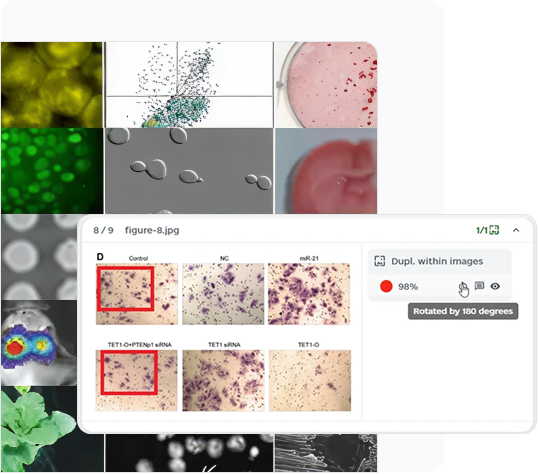
Automatically extract and compare all sub-images in a document to detect duplicated figures, even when images have been transformed.
- Highlights duplicates with precise bounding boxes and confidence scores
- Detects even tiny duplicated sections that are hard to see manually
- Identifies duplicates after rotation, mirroring, scaling, brightness/contrast adjustments, and color modifications
- Covers all major scientific image types: microscopy, western blots, gel electrophoresis, flow cytometry (FACS & FC), histology & pathology slides, scientific photographs, and cell cultures
Detect Image Plagiarism
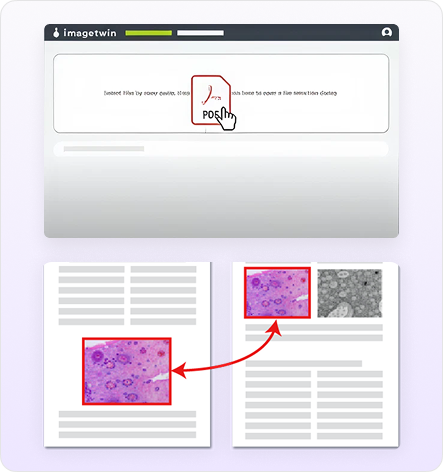
Screen figures against a vast database of published scientific images to identify cross-paper duplication and ensure proper attribution.
- Detects reused and altered figures across publications
- Screens against 150+ million published scientific images with similarity scores and source citations
- Traces duplicate origins using DOI, PubMed, PMC metadata, and research identifiers
- Flags matches with bounding boxes, similarity scores, and original source citations
Detect Image Manipulations
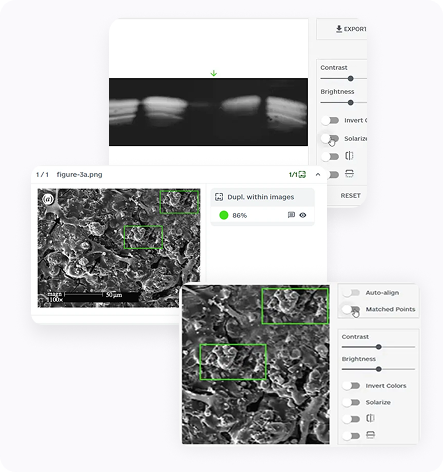
Detect splicing, copy-move forgeries, and hidden alterations in scientific images using AI-driven forensic analysis.
- Automatically detects splicing seams in western blots and gel electrophoresis images
- Identifies cloned, resampled, or stamped areas with confidence scores
- Use the Forensic Toolbox for deeper examination: auto-align transformed images, show matched keypoints, adjust brightness and contrast, and use solarization and background visualization to uncover hidden modifications
Detect AI-Generated Images
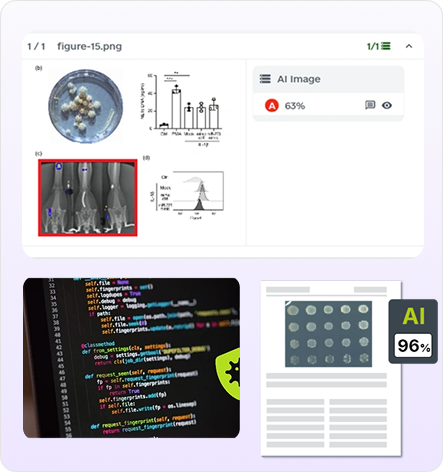
Detect and assess AI-generated images in scientific research with transparent model attribution and confidence scoring.
- Identify potentially AI-generated visuals in scientific figures
- Assess flagged cases with confidence scores.
- See which AI generator may have created an image, with attribution to the most probable model or models
- Detail view provides visual evidence to help interpret and verify flagged cases
Trusted by the Scientific Community
Imagetwin’s effectiveness is validated by independent academic studies and trusted by 8 out of 10 of the world’s largest academic publishers.


of the largest academic publishers use Imagetwin as part of their image integrity and research quality assurance processes.

The leading image integrity experts use Imagetwin and post their findings on PubPeer.
Detect Image Integrity Issues in Seconds
Leverage powerful AI-driven analysis to instantly uncover image duplications, manipulations, plagiarism, and AI-generated visuals. Get clear, actionable results in seconds—without slowing down your review process.

Detect Integrity Issues in Seconds
AI-powered analysis flags duplications, plagiarism, manipulations, and AI-generated images in seconds

Protect Your Reputation
Integrity issues can compromise research credibility. Imagetwin ensures that even the smallest errors do not slip through

Compare Against Publication
Detect plagiarism in seconds, analyzing figures across 150+ million images from academic literature

Detect Image Issues at Scale
Our tool supports bulk scanning via API, allowing scientific image analysis of thousands of papers efficiently.

Speed Up Paper Reviews
Prioritize high-risk cases by only flagging visual data anomalies, allowing experts to focus where it matters

Stay Ahead of New Challenges
As image integrity challenges evolve, our AI models continuously update to detect emerging risks in scientific imaging.
Using Imagetwin is Simple
With user-friendly AI tools for image analysis, integrity checks in scientific papers are accessible without sacrificing effectiveness.
Select
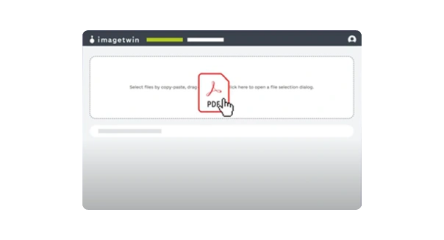
Upload a single PDFs or multiple image files in JPG, TIF, PNG, GIF, and more.
Scan
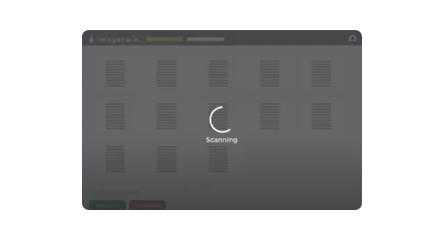
Initiate a full AI-driven image processing scan with one click.
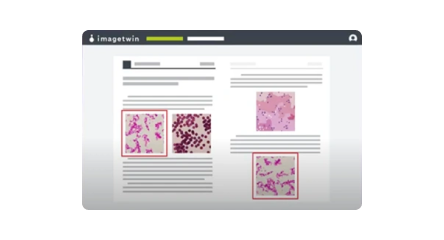
Examine
Receive results in seconds via our web interface with highlighted integrity concerns.
Powerful Features for Comprehensive Image Analysis
Imagetwin combines advanced AI with user-friendly tools to ensure research integrity at every step.
Extensive Database
Leverage a vast database of over 100 million published figures to detect plagiarism.
Confidence Scores
Toggle with confidence scores for each analysis to make informed decisions.
API Access
Integrate Imagetwin into peer review, publishing, and institutional workflows.
Forensic Toolbox
Use image analysis tools such as matched keypoints and filters for detailed evaluations.
Private Repository
Build an article database and auto-check new submissions for image duplicates.
Data Encryption
Your data is protected with industry-standard encryption and security best practices.
How Imagetwin changes the way you ensure image integrity
Without Imagetwin
Image integrity issues often go undetected, risking research credibility.
Manual image checks are time-consuming and prone to human error.
Cross-publication plagiarism detection is nearly impossible without exhaustive effort.
Image manipulations like splicing or copy-move forgeries require expert forensic analysis.
Tracking integrity concerns and reports is disorganized and inefficient.
With Imagetwin
AI-powered detection instantly finds duplications, manipulations, and AI-generated images.
Automated analysis highlights issues with confidence scores and bounding boxes quickly.
Screens millions of scientific images to identify duplicates and plagiarism rapidly.
Detects splicing, copy-move forgeries, and transformations automatically with precision.
Generates detailed PDF reports, keeps scan history, and integrates via API seamlessly.
Protect Research Integrity with Confidence
Start using Imagetwin to detect image integrity issues and support trustworthy research publishing.
Frequently asked questions
How long does it take to scan a manuscript or paper with Imagetwin?
The processing time depends on the number of images and figures within a manuscript. On average, Imagetwin completes a full scan in 5 to 20 seconds, ensuring a fast and efficient integrity check.
How many images are in the Imagetwin database?
Imagetwin has indexed over 120 million images from academic literature. This number continues to grow as we regularly update our database with newly published images from open-access papers and partner organizations.
Where does Imagetwin source its database images?
Our image database is built through partnerships with academic publishers and journals, granting access to indexed publications. Additionally, we integrate open-source publications to expand our detection capabilities
Why should publishers share their publication database with Imagetwin?
By allowing Imagetwin to index your publication database, publishers can detect unauthorized image reuse, duplication, and plagiarism across their entire portfolio. This helps maintain research integrity at scale.
We prioritize data privacy and security, ensuring that all image indexing and exchanges are protected with industry-standard encryption and security best practices.
Why doesn’t Imagetwin detect all image integrity issues?
Our current detection accuracy ranges between 80% to 90%, depending on image type and manipulation complexity. Some factors that influence detection include:
- Image size, quality, and resolution
- Applied transformations (cropping, rotation, scaling)
- Content complexity
- While no detection tool is perfect, we are continuously improving our AI models to enhance accuracy and expand detection capabilities.
What is Imagetwin’s detection rate?
Measuring detection accuracy in scientific imaging is complex due to the lack of standardized benchmarks. However, based on internal evaluations using flagged integrity issues from PubPeer, Imagetwin achieves a detection rate of 80% to 90%, depending on the image type and the nature of the integrity concern.
How does Imagetwin evaluate its accuracy?
We assess accuracy using previously retracted papers and flagged cases from PubPeer. By testing on real-world examples of manipulations, AI-generated images, and duplicates, we refine our detection capabilities to ensure higher reliability.
Are scanned manuscripts stored in Imagetwin’s image database?
No. Imagetwin does not store or index scanned manuscripts in its database. All uploaded files remain private, and scanned images are never added to our global dataset.
For more details, refer to our data privacy policy data privacy policy.
What types of integrity issues does Imagetwin detect?
For more detailed guidance on using Imagetwin, contact our support team through our Contact Us page.
What kind of images does Imagetwin analyze?
Imagetwin detects scientific figures, including microscopy images, FACS plots, Western blots, gel images, histology slides, and graphs.
What file formats does Imagetwin support?
Supported formats include PDF, DOCX, JPG, PNG, GIF, BMP, TIF, JFIF, SVG, and WEBP.
Can I request a product demo of Imagetwin?
Yes. Contact us to schedule a personalized AI-powered image analysis demo.
How does Imagetwin detect image manipulations?
Imagetwin automatically detects splicing, copy-move forgeries, and subtle image adjustments in scientific figures.
Using AI and forensic analysis, it flags manipulated regions, such as cloned or resampled areas and splicing seams in western blots.
Built-in tools allow users to auto-align transformed images, highlight duplicated keypoints, adjust brightness and contrast, and reveal hidden edits through background visualization.
What happens to my images after scanning with Imagetwin?
All uploaded images are automatically deleted once processing is complete. However, you can optionally save your scan results in your account for 90 days before they are permanently removed.
Can Imagetwin be used for non-scientific images?
While optimized for scientific imaging, it can detect manipulation in most structured images, but is not designed for creative or artistic analysis.
How does Imagetwin handle rotated, flipped, or scaled duplicates?
Imagetwin normalizes transformed images, ensuring accurate comparisons even when figures have been rotated, flipped, or resized.
How does Imagetwin highlight duplicated regions?
The software automatically detects and marks identical keypoints in flagged images, helping users verify potential manipulation.
Can Imagetwin enhance image visibility for better detection?
Yes, Imagetwin adjusts brightness and contrast to reveal subtle integrity issues that may not be visible in the original image.