Member of STM and COPE · Supporting research and publication integrity
Advanced forensic analysis to detect alterations in research images and safeguard scientific credibility.
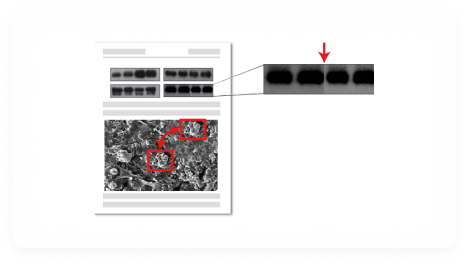
AI model identifies signs of splicing, copy-move forgeries, and localised alterations in western blot images.
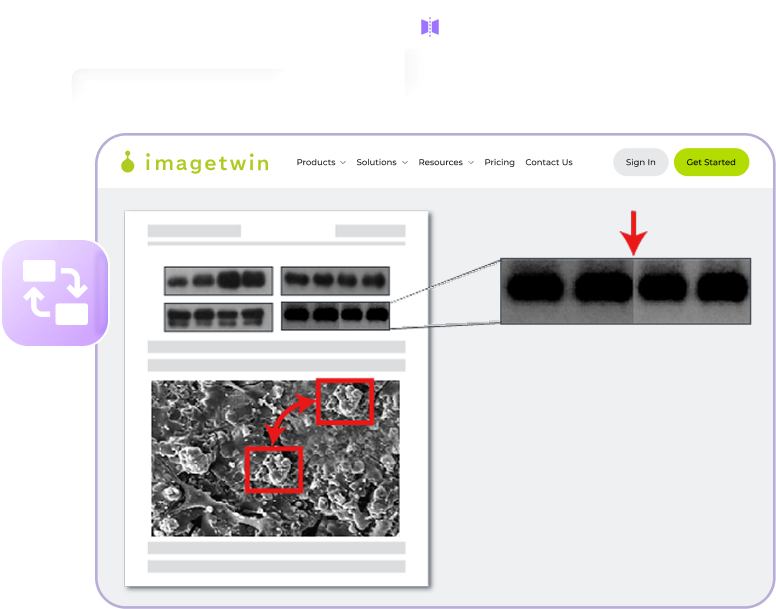
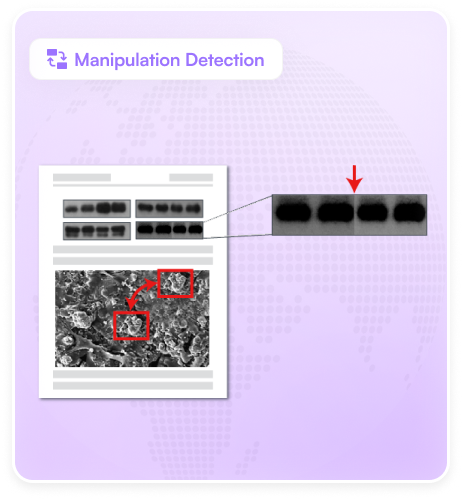
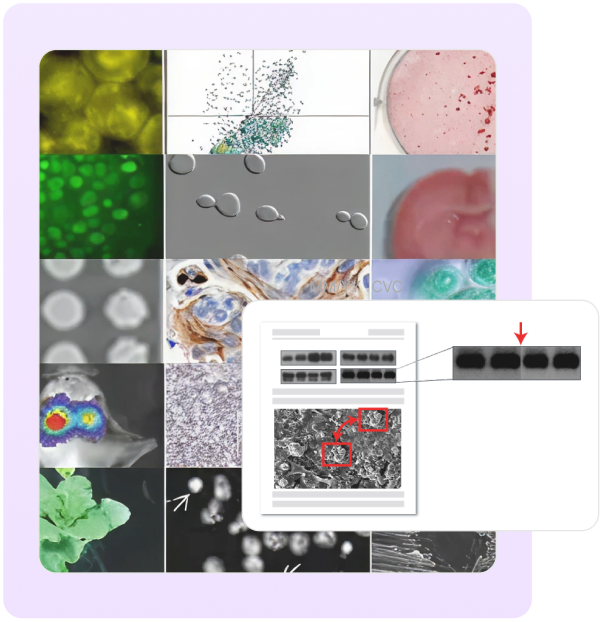
Our AI model uses deep learning and forensic image analysis to identify suspect areas in western blot figures, detecting both splicing and copy-move forgeries under a unified alteration detection model.
Imagetwin detects image manipulation in three simple steps.
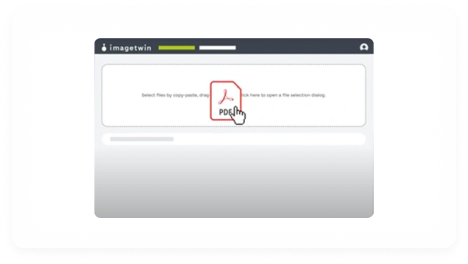
User uploads entire manuscripts, files or individual images to our secure platform for analysis.
Receive a comprehensive report highlighting detected issues. Each flagged image is assigned a single confidence score, helping users to prioritise and assess risks.
Detects splicing, copy-move forgeries, and localised alterations in western blot images using a unified detection model.
Flagged images are assigned a detection probability score, helping users to assess risks more accurately.
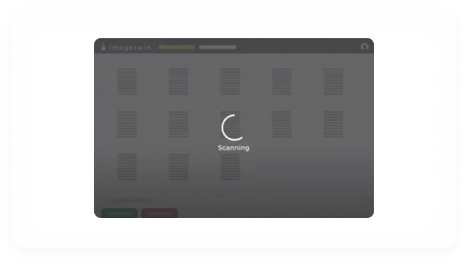
Analyze large datasets efficiently with our batch-scanning feature. Ideal for publishers, journals, and institutions.
Easily generate detailed PDF reports summarising all flagged manipulations with visual evidence.
Your data is protected with industry-standard encryption and security best practices.
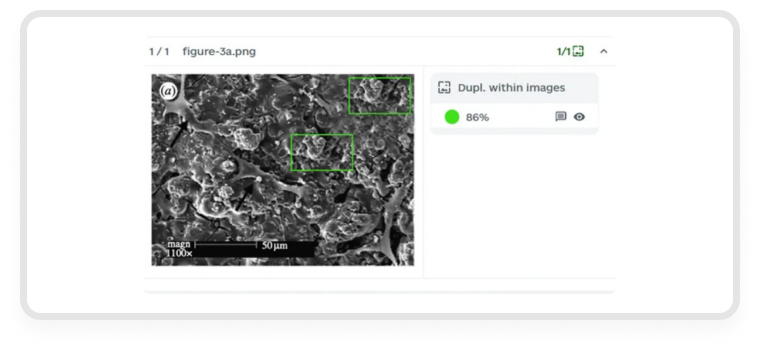
Our platform also detects image duplication, plagiarism and AI-generation.
The system is trained specifically on western blot images, allowing it to detect subtle and complex forms of alteration including splicing and copy-move forgeries.
Start using Imagetwin to detect image integrity issues and support trustworthy research publishing.
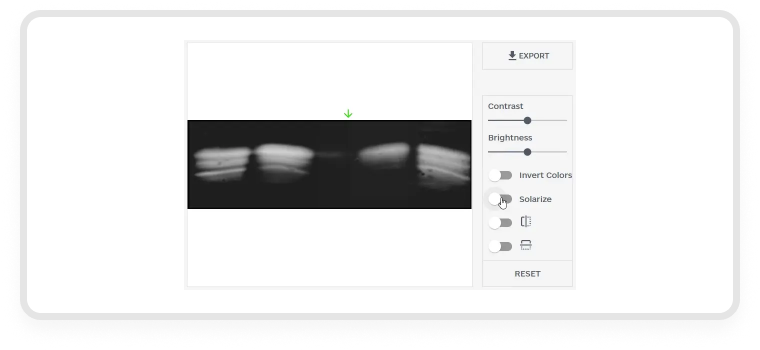
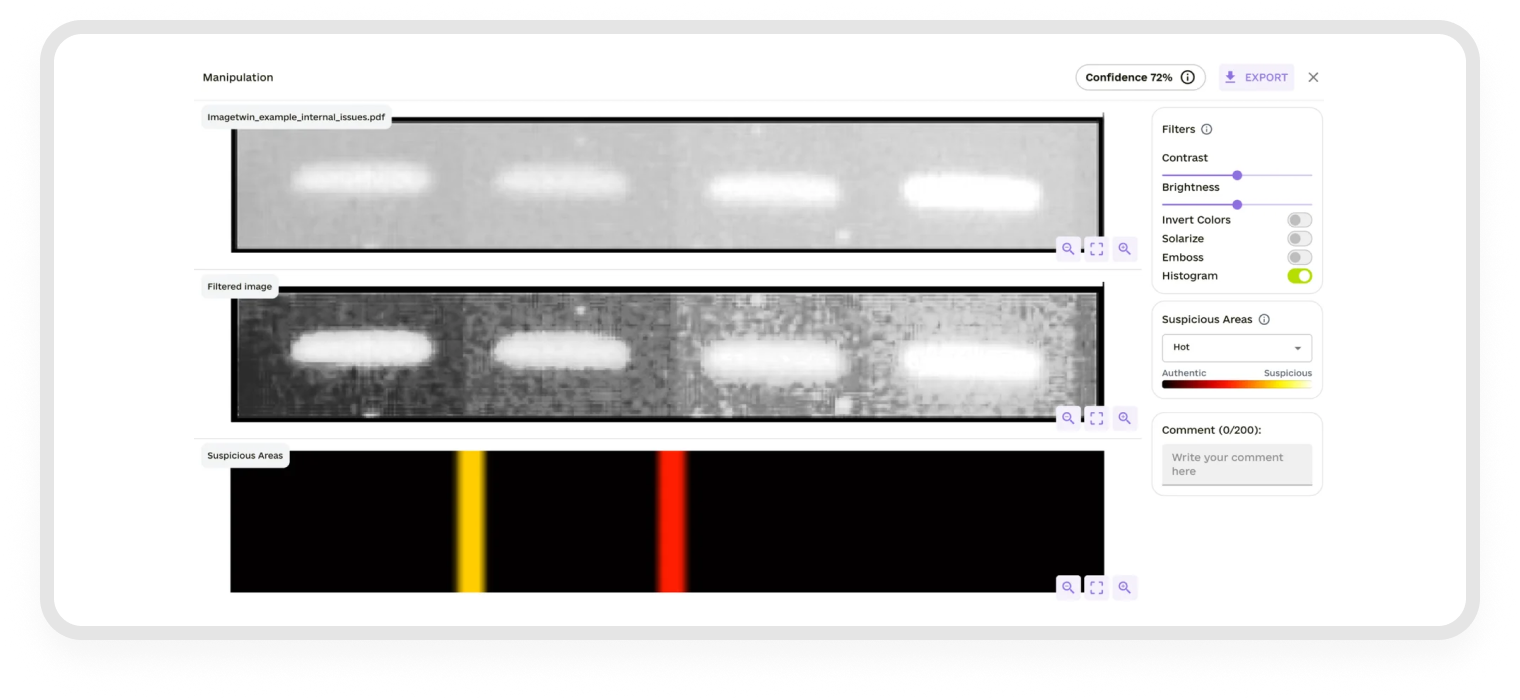
Imagetwin detects splicing (both vertical and horizontal), copy-move forgeries, and other localised alterations in western blot images. The system uses a unified alteration detection model that highlights inconsistent regions using a colour-coded heatmap.
Each flagged image is shown in a three-panel detail view: the original image, a filtered version with enhanced visibility, and a colour-coded heatmap highlighting regions of concern. Users can adjust heatmap colouring and transparency for detailed examination.
Currently, the dedicated manipulation detection model is applied to western blot images. Other image types such as microscopy and histology are covered by Imagetwin’s duplication and plagiarism detection features.
The current model achieves a true positive rate of approximately 83% with a false positive rate under 2%, based on testing against real-world cases from PubPeer and challenging edge cases. The model is continuously updated to improve accuracy.
Duplication detection identifies reused figures within or across manuscripts. Manipulation detection identifies alterations made within a single image, such as splicing seams or cloned regions in western blots. Both features are included in every Imagetwin scan.