Member of STM and COPE · Supporting research and publication integrity
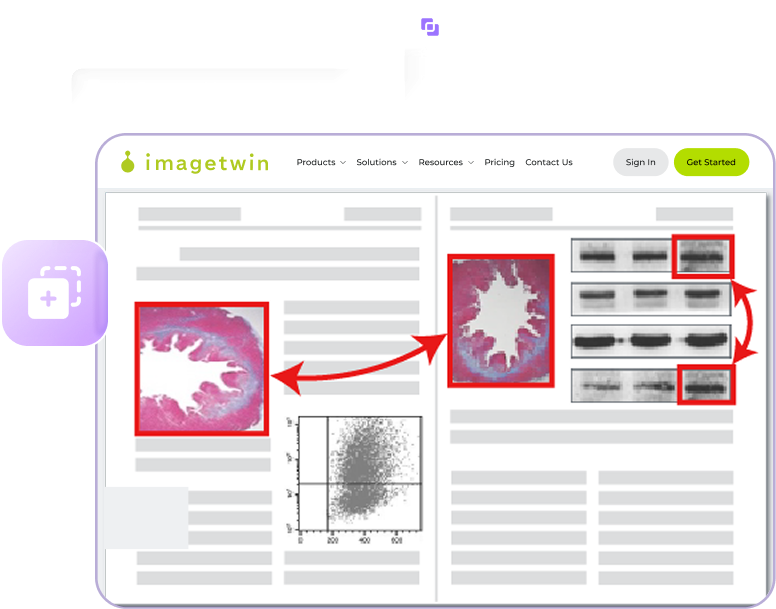
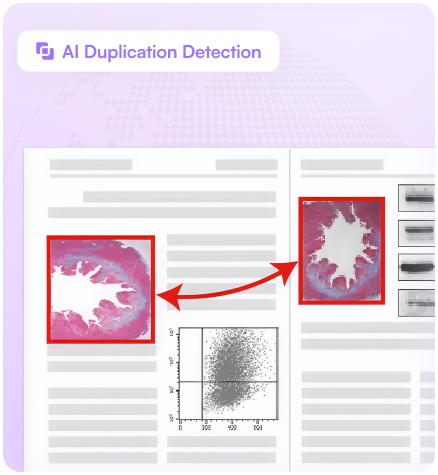
Scientific image duplication or figure reuse can compromise transparency and misrepresent results. Imagetwin helps identify reused, cropped, rotated, or mirrored figures both within and across research papers.
Purpose-built technology for detecting duplicates and ensuring research transparency.
Flags identical and altered versions of images, including cropped, rotated, or mirrored figures.
Imagetwin is built for publishers, institutions, universities, and researchers to support high-quality screening.

Detection is based on figures commonly used in publications, such as microscopy, histology, and western blots.
Reusing figures across multiple submissions or within the same paper, without transparency or attribution, can mislead readers and reviewers. Imagetwin identifies self-plagiarism in research even when they are cropped, rotated, or slightly altered.
The tool is updated regularly to improve detection accuracy and can help screen preprints, accepted papers, or archived content for self-plagiarism concerns.
Identical images reused in multiple places, either within the same manuscript or across separate submissions. These may appear in different contexts or figure labels.
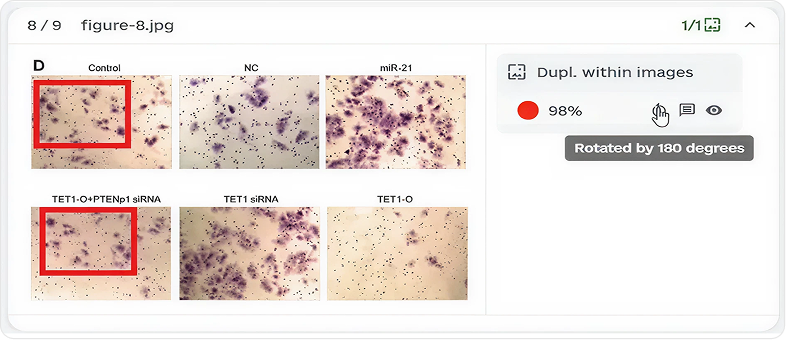
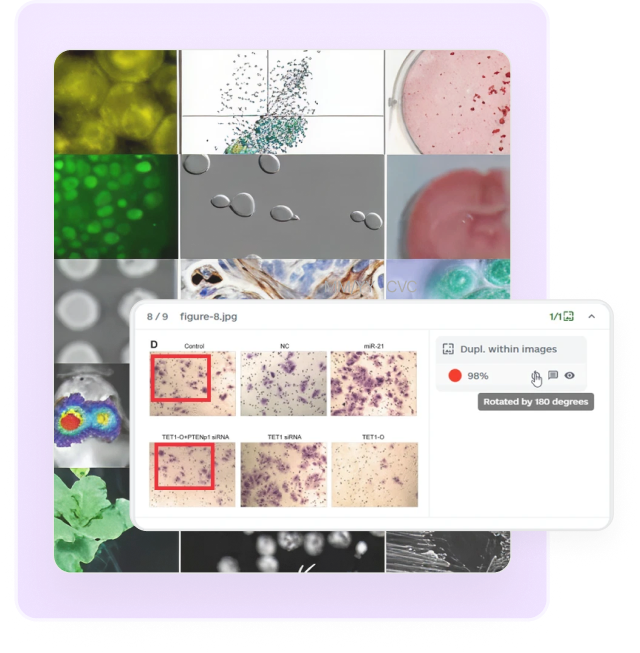
Images that have been rotated or mirrored to obscure reuse. This includes 90, 180, or 270 degree rotation as well as horizontal or vertical flipping.
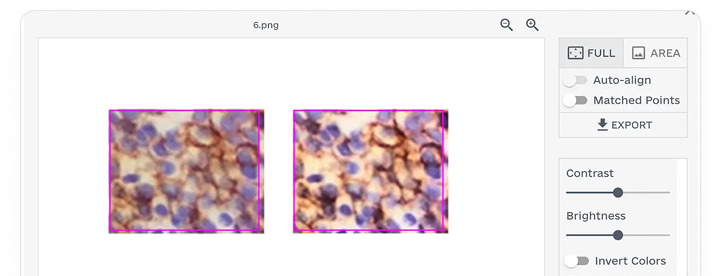
Subtle changes in brightness, exposure, or contrast can be used to make reused figures appear unique. The system detects visual similarity even after tonal manipulation.
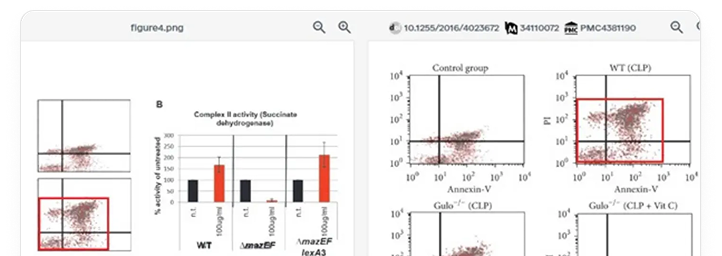
Images that appear across separate publications without proper attribution. These are detected through comparison with over 150 million indexed figures. See Image Plagiarism.
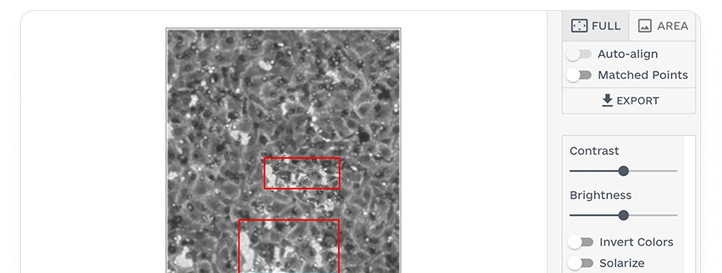
Small regions copied from one part of an image into another. These may include gel bands, microscopy sections, or background textures to fill space or fabricate results.
Figures that have been cropped, zoomed in, or resized to look visually distinct.
Imagetwin detects image duplication in three simple steps.
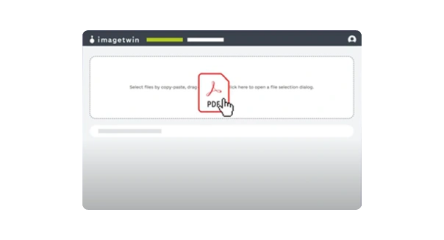
User uploads entire manuscripts, files or individual images to our secure platform for analysis.
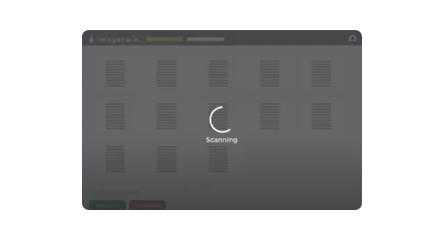
Uses pattern recognition and deep learning to detect duplication, even in altered images.
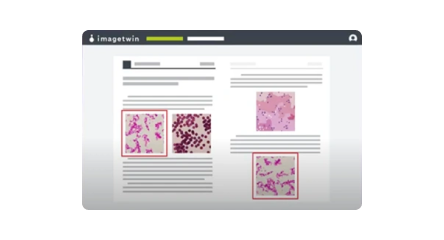
Get a report with flagged issues, similarity overlays, and confidence scores.
Everything you need to efficiently manage, prioritize, and track image duplication checks.
Detects identical, cropped, rotated, flipped, or resized figures across manuscripts and published literature.
Assigns a probability score from 0-100% to help assess the severity of detected issues, allowing reviewers to prioritize
Create your own database of articles and compare new submissions with your repository to detect duplicates
Generate detailed PDF reports showing matched figures, bounding boxes, and source references.
Integrates into existing workflows, enabling large-scale automated integrity checks through bulk processing and APIs. Ideal for publishers, journals, and institutions.
Use advanced filtering options to exclude irrelevant detections, sort flagged images, and quickly navigate results
Image duplication and reuse can undermine research integrity. Imagetwin helps publishers, institutions, and researchers detect these issues early, supporting transparent, high-quality science.
Built specifically to detect duplication in research images such as microscopy, histology, western blots, and charts.
Our detection process is designed to be efficient, helping journals, publishers, and institutions identify concerns early in the publication process.
We prioritize data encryption and privacy, ensuring your files remain confidential.
Detects duplication even after cropping, rotating, flipping, resizing, or adjusting contrast and brightness.
Trusted by publishers, editors, and research institutions for pre- and post-publication integrity checks.
Detection capabilities are updated regularly based on user feedback, expanded datasets, and new manipulation patterns.
Start using Imagetwin to detect image integrity issues and support trustworthy research publishing.
Imagetwin detects a broad range of duplication types, including exact duplicates, cropped or resized reuse, rotated or flipped images, brightness and contrast adjustments, partial or cloned regions, and plagiarised figures from published articles. Detection works both within a single manuscript and across published literature.
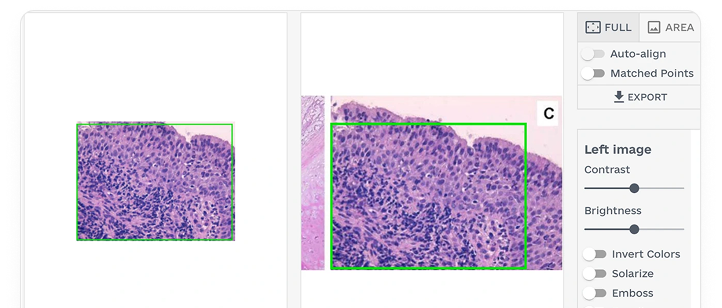
Imagetwin normalises transformed images, ensuring accurate comparisons even when figures have been rotated, flipped, or resized. The auto-align feature allows side-by-side comparison of the original and transformed versions.
Flagged duplicates are highlighted with precise bounding boxes showing the matched areas. Each case includes matched keypoints, similarity overlays, and a confidence score from 0–100% so reviewers can quickly assess severity.
Yes. Imagetwin compares figures against a database of over 150 million published scientific images. Matches are flagged with source citations including DOI, PubMed, and PMC metadata, making it easy to trace the original publication. For more detail, see Image Plagiarism.
Imagetwin is trained on real research figures and detects duplication across all major scientific image types, including microscopy images, western blots, gel electrophoresis, flow cytometry (FACS & FC), histology and pathology slides, scientific photographs, and cell cultures.